
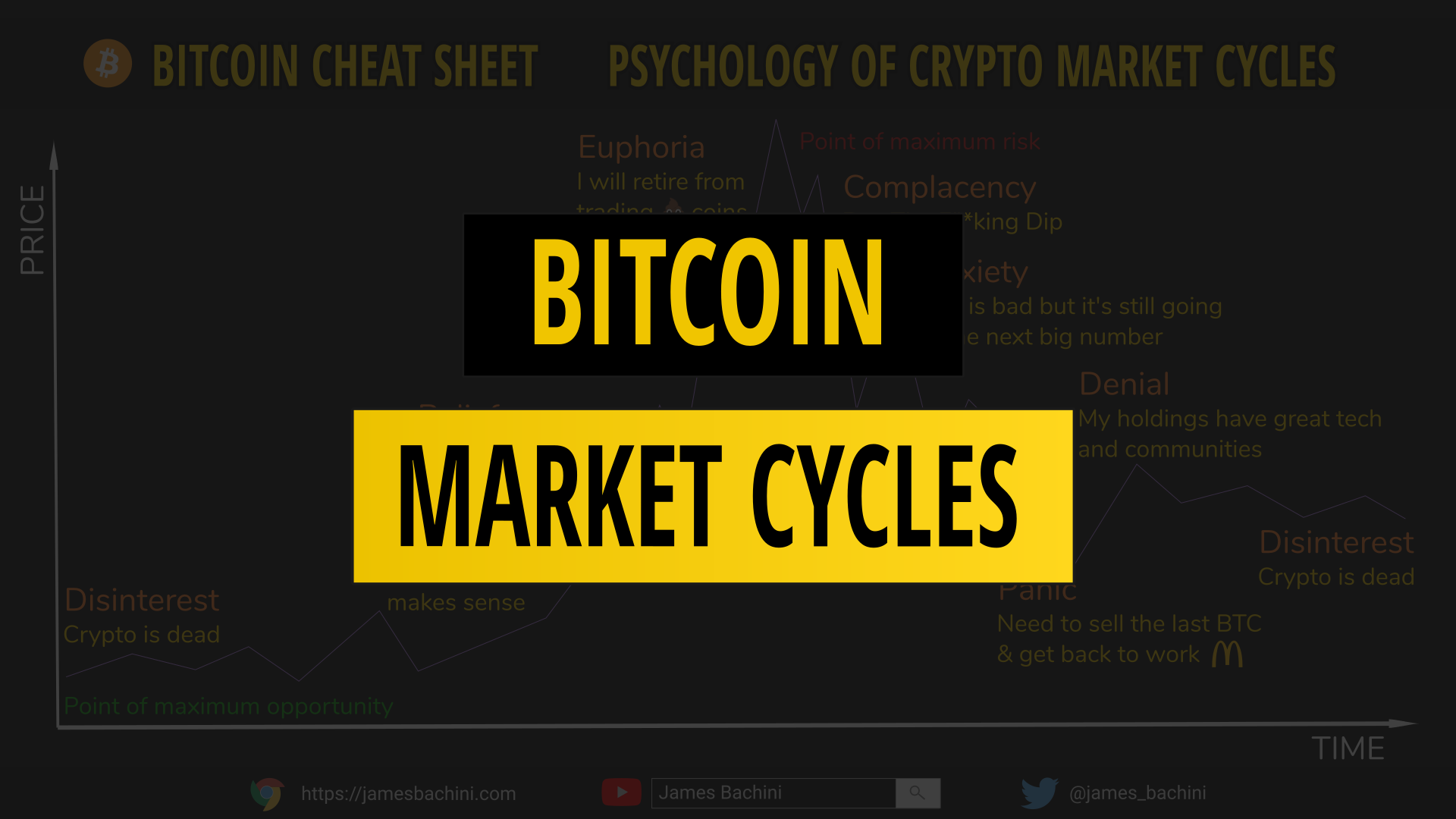
Crypto Market Cycles: Understanding the Rhythms of Cryptocurrency Booms and Busts
Cryptocurrency markets, led by Bitcoin and followed by thousands of altcoins, are notorious for their volatility. Dramatic price swings, explosive bull runs, and painful crashes have become standard features of this emerging asset class. These fluctuations are not entirely random; they tend to follow predictable market cycles—patterns of human behavior, technological development, and macroeconomic influence.
In this article, we explore the crypto market cycles in detail: their phases, drivers, historical examples, and how investors can use this understanding to navigate the space more effectively.
1. What is a Market Cycle?
A market cycle is a recurring pattern in asset prices, usually driven by collective investor psychology, economic fundamentals, and external factors. These cycles can be seen in stock markets, real estate, and, most dramatically, in cryptocurrencies.
Crypto market cycles typically follow four distinct phases:
- Accumulation (Stealth Phase)
- Uptrend (Bull Market)
- Distribution (Euphoria and Peak)
- Downtrend (Bear Market)
Each of these phases reflects changing investor sentiment, market conditions, and levels of adoption or speculation.
2. The Four Phases of a Crypto Market Cycle
Phase 1: Accumulation Phase
- Market sentiment: Pessimistic to neutral
- Participants: Long-term believers, developers, institutions with insider knowledge
- Price action: Sideways, low volatility
This phase occurs after a significant market crash or long bear market. Prices are low, interest is minimal, and media attention has moved elsewhere. Retail investors are mostly gone.
Yet, behind the scenes, development continues. Smart money begins to accumulate assets quietly.
Signs of this phase:
- Negative news dominating the media
- Bitcoin volatility is low
- Whale wallets begin accumulating
- Institutional investment increases slowly
Phase 2: Bull Market (Markup Phase)
- Market sentiment: Optimism → Belief → Euphoria
- Participants: Early adopters, retail investors, traders
- Price action: Upward trend, increasing volume
The bull market begins when demand outweighs supply, often due to a major catalyst (e.g., Bitcoin halving, ETF approval, macroeconomic instability). Prices begin to rise, attracting more participants. As prices rise, FOMO (Fear of Missing Out) kicks in, leading to exponential growth.
Key characteristics:
- Mainstream media covers crypto positively
- Retail money floods in
- ICOs, NFTs, and meme coins surge
- Social media hype intensifies
The market hits parabolic growth and eventually reaches a peak, where prices are significantly overvalued compared to actual use and adoption.
Phase 3: Distribution Phase
- Market sentiment: Euphoria → Anxiety → Denial
- Participants: Everyone, including latecomers and institutional traders
- Price action: Choppy, high volatility, trend reversal
This is the topping phase, where smart money starts selling into strength. Retail investors are still euphoric, but price momentum slows. Fake breakouts, whale manipulations, and massive inflows distort the market.
Signs of this phase:
- Volatility increases
- Insider selling begins
- Regulatory threats appear
- Google searches peak
- Influencers over-promote altcoins
This is usually the most dangerous part of the cycle, as many investors buy at the top and get caught in the impending collapse.
Phase 4: Bear Market (Markdown Phase)
- Market sentiment: Fear → Capitulation → Disgust
- Participants: Panic sellers, remaining holders, short-sellers
- Price action: Prolonged downtrend, low volume
After the bubble bursts, prices begin to crash rapidly. What follows is months or years of declining prices, low enthusiasm, and loss of interest. Projects without real value die off.
During this phase:
- Media calls crypto a scam or dead
- Prices fall 70–90% from the top
- Retail investors exit permanently
- Development continues quietly
Ironically, this phase is where the best long-term opportunities are born, setting the stage for the next accumulation phase.
3. Historical Market Cycles of Bitcoin
Cycle 1: 2011 Bull Run
- Price rose from ~$0.30 to $32
- Crashed to ~$2 in a few months
- Early indication of crypto’s boom-bust nature
Cycle 2: 2013 Bubble
- Bitcoin rose from ~$13 to ~$1,100
- Driven by Cyprus banking crisis and early Chinese adoption
- Crashed to ~$200 by 2015
Cycle 3: 2017 Mania
- Bitcoin soared from ~$1,000 to ~$20,000
- Fueled by ICOs, Ethereum, and retail FOMO
- Sharp correction to ~$3,000 in 2018
Cycle 4: 2021 Bull Run
- Bitcoin jumped from ~$10,000 to ~$69,000
- Institutional involvement (Tesla, MicroStrategy), NFT boom
- Peaked in November 2021, fell below $20,000 in 2022
Each cycle demonstrates the same psychological pattern, with varying levels of hype and new technology themes.
4. What Drives Crypto Market Cycles?
1. Bitcoin Halving
Occurs every ~4 years. Reduces Bitcoin mining rewards by half, decreasing supply. Historically triggers bull runs:
- 2012 → 2013 bull market
- 2016 → 2017 bull market
- 2020 → 2021 bull market
- 2024 → ?
2. Macroeconomic Conditions
- Inflation, interest rates, global financial instability can drive investors toward crypto as a hedge.
- Conversely, quantitative tightening and rate hikes hurt liquidity and trigger sell-offs.
3. Speculation and Sentiment
Crypto markets are sentiment-driven, amplified by social media, influencers, and fear/greed.
4. Regulation and Government Action
News about bans, crackdowns, or ETF approvals can instantly shift momentum in either direction.
5. Strategies to Navigate Market Cycles
✅ Buy Low, Sell High (Sounds Simple, Hard to Do)
The goal is to buy during accumulation and sell during euphoria—but emotions and noise make this challenging.
🧠 Have a Plan
- Set price targets and take profit gradually
- Use tools like Dollar Cost Averaging (DCA) for long-term entry
- Diversify across high-quality projects
⚠️ Avoid FOMO and Hype
Don’t chase pumps. By the time the average investor hears the news, smart money is already exiting.
🔒 Secure Your Holdings
In downtrends, scams and hacks increase. Use cold wallets and avoid unknown DeFi projects.
🧘 Stay Emotionally Detached
Crypto investing can be stressful. Recognize your emotions during peaks and troughs.
6. The Future of Crypto Cycles
Will cycles always repeat?
While the basic psychology remains, future cycles may evolve due to:
- Greater institutional involvement
- Regulatory clarity
- Lower volatility over time
- Utility-driven adoption over speculation
Nonetheless, understanding market cycles remains a vital skill for any investor or trader in the crypto space.
Conclusion
Crypto market cycles are more than just price patterns—they are windows into mass psychology, innovation, and global economic shifts. Recognizing where we are in the cycle can help investors avoid common traps, reduce risk, and maximize returns.
As the crypto industry matures, new cycles will likely form—perhaps with less intensity, but the same fundamental drivers. By studying the past, we can better prepare for what’s to come in the world of digital assets.