Risks of Meme Coins: What Every Investor Needs to Know
Meme coins have taken the cryptocurrency world by storm. From Dogecoin’s viral rise to the recent waves of tokens like Shiba Inu, Pepe, and Bonk, these humorous and community-driven digital assets have gained immense popularity. But behind the memes, memes coins carry substantial risks that often go overlooked by new investors lured in by the promise of overnight riches.
This article dives deep into what meme coins are, their appeal, and most importantly — the critical risks every investor should understand before putting money into them.
What Are Meme Coins?
Meme coins are cryptocurrencies inspired by internet jokes, pop culture references, or social media trends. Unlike Bitcoin or Ethereum, which have clear use cases and robust ecosystems, meme coins are often created for fun or speculation. They are heavily driven by hype, celebrity endorsements, and online communities, rather than fundamental value.
Examples of Popular Meme Coins:
- Dogecoin (DOGE) – The original meme coin based on the Doge meme.
- Shiba Inu (SHIB) – Created as a Dogecoin competitor, also themed around the Shiba Inu dog.
- Pepe (PEPE) – Based on the “Pepe the Frog” meme.
- Floki Inu (FLOKI) – Inspired by Elon Musk’s dog.
Why Meme Coins Attract Investors
Despite their humorous nature, meme coins have gained serious traction for a few key reasons:
- 🚀 High Volatility = Big Gains: Early investors can see astronomical returns — 100x or even 1000x gains aren’t unheard of.
- 🧠 Viral Marketing: Meme coins often trend on platforms like Twitter, TikTok, or Reddit, leading to massive FOMO (fear of missing out).
- 🤝 Community-Driven: Loyal communities can provide a sense of belonging and excitement.
- 📢 Influencer Hype: Endorsements from celebrities (e.g., Elon Musk and DOGE) create buying frenzies.
But while these coins offer potential rewards, they come with significant risks that far outweigh the benefits for most investors.
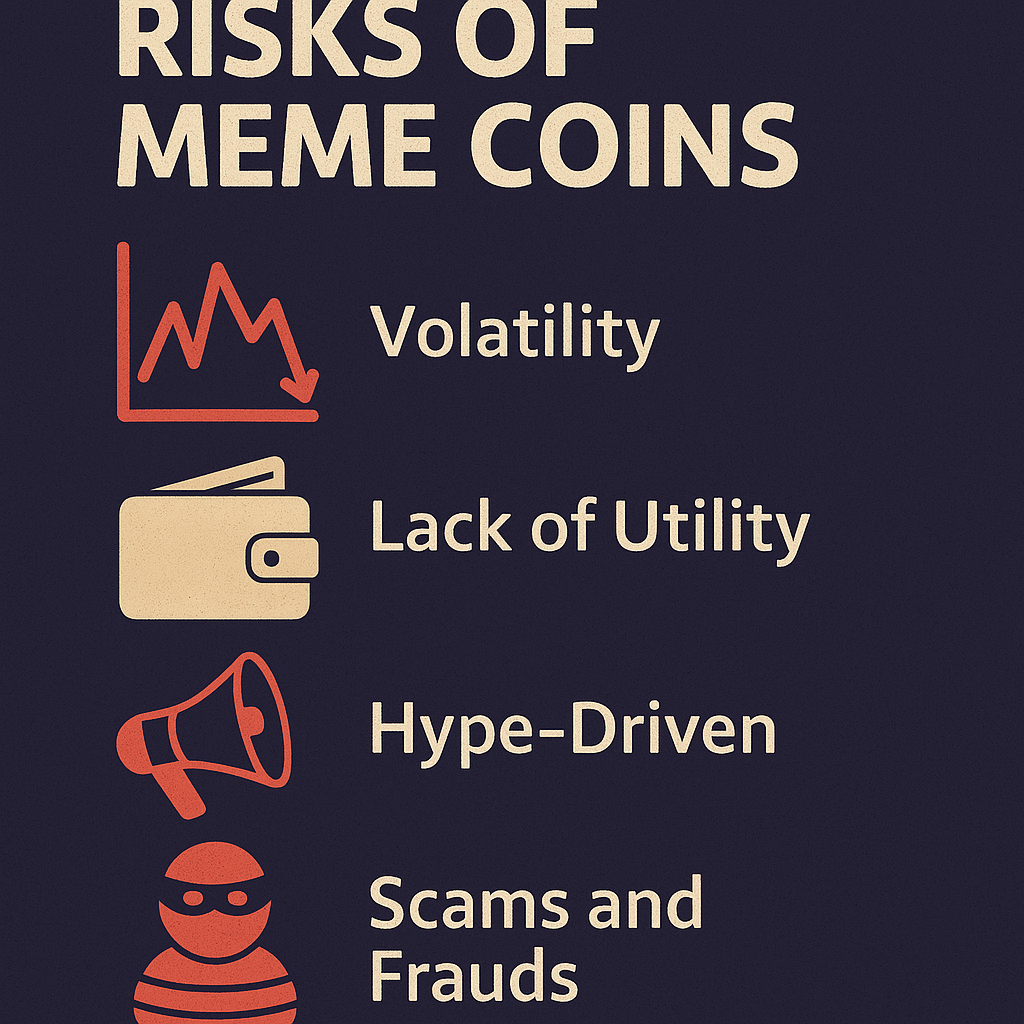
⚠️ Top Risks of Meme Coins
1. Extreme Volatility
Prices of meme coins are notoriously unstable. A single tweet or meme can cause the price to spike or crash within minutes. For example:
- DOGE surged over 10,000% in early 2021 — and later fell more than 90%.
- PEPE and similar tokens have risen and fallen in value in mere days.
Risk: Many investors buy at the top and get stuck holding heavy losses when the hype dies down.
2. Lack of Utility or Fundamentals
Most meme coins lack a real use case, technological innovation, or revenue model. They often don’t solve any problem or offer anything new to the blockchain ecosystem.
Risk: Long-term value is unsustainable. Once hype fades, the coin may become irrelevant.
3. Rug Pulls and Scams
Because meme coins are easy to create and list on decentralized exchanges, they’re a hotbed for fraud.
What is a rug pull? A type of scam where developers suddenly sell off their holdings or drain liquidity, causing the coin to crash and leaving investors with worthless tokens.
Red flags to watch for:
- No real team behind the project
- Poor or copied whitepapers
- No locked liquidity or audited contracts
Risk: Investors can lose their entire investment within minutes.
4. Market Manipulation
Whales (large holders) can easily manipulate meme coin prices due to low market caps and shallow liquidity.
Risk: Price swings may be orchestrated, leading to pump-and-dump cycles where whales profit and small investors lose.
5. No Regulatory Protection
Meme coins usually do not comply with financial regulations. If a project is fraudulent or mismanaged, there’s often no legal recourse for investors.
Risk: Unlike stock markets, crypto meme coin losses are not protected by regulators or governments.
6. Dependency on Hype and Sentiment
These coins rely entirely on community sentiment, which can change rapidly. If the meme becomes stale or the community loses interest, the coin collapses.
Example: The fall of coins like “SaveTheKids” and “Squid Game Token,” where sentiment collapsed after controversy.
7. Dilution and Token Supply
Many meme coins have absurdly high total supplies (in the trillions or quadrillions) with burn mechanisms or redistribution models that often mislead investors.
Risk: Inflation can erode value, and marketing terms like “deflationary” are often used without transparency.
8. FOMO-Based Investing
Most meme coin buying is emotionally driven — not backed by research. Many investors join because “everyone else is” and hope for quick profits.
Risk: Herd mentality often leads to buying at unsustainable highs and panic selling at the lows.
✅ How to Protect Yourself
If you’re still tempted to invest in meme coins despite the risks, follow these safety tips:
1. Do Your Own Research (DYOR)
- Read the whitepaper.
- Investigate the team and community.
- Check liquidity lock status and smart contract audits.
2. Use Only Risk Capital
Never invest more than you can afford to lose. Consider meme coins as gambling — not a long-term investment strategy.
3. Avoid New or Suspicious Coins
Stick with more established meme coins (like DOGE or SHIB) rather than new, unknown ones with zero history.
4. Watch for Warning Signs
- Promises of guaranteed returns
- Overhyped marketing
- Anonymous developers
- Inactive GitHub or website
5. Use Decentralized Tools
- Use DeFi scanners to check contract health.
- Explore analytics platforms like DEXTools or BSCScan for suspicious tokenomics.
🎯 Are Meme Coins Ever Worth It?
In short: Meme coins can be fun, speculative assets, but they are not reliable stores of value or serious investments. They might fit in a high-risk, high-reward portion of a diversified portfolio — but only for experienced traders who understand the dangers.
Think of meme coins more like lottery tickets. Sometimes they pay off — but most of the time, they don’t.
🔚 Conclusion: Treat with Caution
Meme coins symbolize the entertaining and chaotic side of the crypto market, but beneath the memes lie substantial risks that could wipe out your investment. Whether you’re a seasoned trader or a curious beginner, approach meme coins with a skeptical eye, cautious wallet, and informed mindset.
Always remember the golden rule: If it sounds too good to be true, it probably is.