How to Read Forex Charts (Candlesticks, Trends, Indicators)
Reading Forex charts is a crucial skill for any forex trader. Understanding how to read candlesticks, trends, and indicators can provide valuable insights into the market and help make informed trading decisions. Below is a detailed guide on how to read forex charts effectively:
1. Understanding Forex Charts
A forex chart visually represents the price movements of currency pairs over a specific period of time. These charts can show various timeframes, from minutes (1-minute chart) to daily (daily chart) or even weekly (weekly chart).
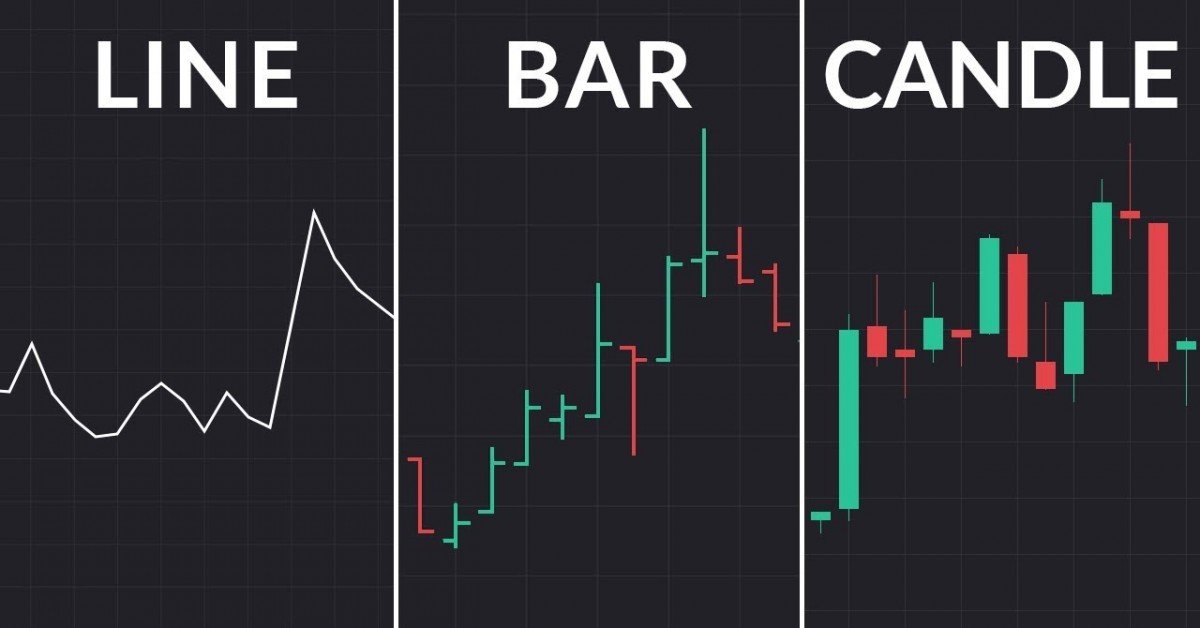
There are different types of forex charts you can use:
- Line Charts: The simplest form of charts that display a single line showing the closing price over a period of time.
- Bar Charts: Bar charts show the open, high, low, and close prices (OHLC) for a specific time period.
- Candlestick Charts: Candlestick charts display the same information as bar charts but with a more visually appealing and easy-to-understand format.
Candlestick charts are the most popular for forex trading as they offer more information at a glance, including market sentiment and potential trend reversals.
2. How to Read Candlesticks
Candlestick charts are formed by individual “candles,” each representing a specific time period. Each candlestick has four key components:
- Open Price: The price at the beginning of the time period.
- Close Price: The price at the end of the time period.
- High Price: The highest price reached during the time period.
- Low Price: The lowest price reached during the time period.
Candlestick Anatomy:
- The body of the candlestick represents the difference between the open and close prices.
- If the closing price is higher than the opening price, the candlestick body is typically green or white (bullish).
- If the closing price is lower than the opening price, the candlestick body is typically red or black (bearish).
- The wick or shadow represents the highest and lowest prices reached during the time period.
- The upper wick shows the price range between the high and the closing price (for a bearish candlestick) or the open and high price (for a bullish candlestick).
- The lower wick shows the price range between the low and closing price (for a bullish candlestick) or the open and low price (for a bearish candlestick).
Key Candlestick Patterns:
- Bullish Engulfing: A larger green candlestick follows a smaller red one, indicating a potential uptrend.
- Bearish Engulfing: A larger red candlestick follows a smaller green one, indicating a potential downtrend.
- Doji: A candlestick with a very small body, indicating indecision in the market.
- Hammer: A candlestick with a small body and a long lower wick, indicating potential reversal from a downtrend.
3. Identifying Trends on Forex Charts
Trends are one of the most important concepts in forex trading. A trend is simply the direction in which the market is moving.
- Uptrend (Bullish Trend): The market is moving higher. The price makes higher highs and higher lows.
- Look for a series of consecutive higher lows and higher highs.
- The trendline connecting the lows of the price will slope upward.
- Downtrend (Bearish Trend): The market is moving lower. The price makes lower highs and lower lows.
- Look for a series of consecutive lower highs and lower lows.
- The trendline connecting the highs of the price will slope downward.
- Sideways Trend (Consolidation/Range Bound): The market is neither moving up nor down significantly. It is moving within a defined range.
- Look for price movements within horizontal support and resistance levels.
Trend Indicators: There are several indicators to help identify trends:
- Moving Averages: These smooth out price data to help identify the direction of the trend.
- A simple moving average (SMA) or exponential moving average (EMA) can be used to track trends. When the price is above the moving average, it indicates an uptrend, and when the price is below the moving average, it indicates a downtrend.
- Trendlines: A straight line drawn along the lows in an uptrend or the highs in a downtrend.
- Support is the price level where the trend tends to bounce upwards.
- Resistance is the price level where the trend faces resistance and may reverse.
- Indicators like the Moving Average Convergence Divergence (MACD): The MACD helps to identify potential trend reversals. The MACD histogram measures the difference between the MACD line and the signal line. If the MACD line crosses above the signal line, it could signal an uptrend. If it crosses below, it could signal a downtrend.
4. Understanding Forex Indicators
Indicators are mathematical calculations based on the price, volume, or open interest of a currency pair. They are used to provide additional insight into market behavior and help traders make more informed decisions.
Here are some of the most commonly used indicators in forex trading:
- Moving Averages (MA):
- The moving average smooths out price data to create a trend-following indicator. The SMA averages the price over a specified period (e.g., 50-day, 200-day), while the EMA gives more weight to recent prices and reacts faster to price changes.
- The crossing of shorter moving averages over longer moving averages (Golden Cross) is considered a bullish signal, while the opposite (Death Cross) is a bearish signal.
- Relative Strength Index (RSI):
- The RSI measures the speed and change of price movements. It ranges from 0 to 100 and helps determine whether a currency pair is overbought or oversold.
- An RSI above 70 suggests the market is overbought, and a reversal or pullback might be coming.
- An RSI below 30 suggests the market is oversold, and a potential uptrend might occur.
- Bollinger Bands:
- Bollinger Bands consist of three lines: the middle band (SMA) and two outer bands that are two standard deviations above and below the middle band.
- The outer bands expand and contract based on market volatility. When price moves closer to the upper band, it may indicate overbought conditions; when price moves closer to the lower band, it may indicate oversold conditions.
- Stochastic Oscillator:
- The stochastic oscillator compares a currency pair’s closing price to its price range over a specific period.
- When the stochastic value is above 80, it indicates that the currency pair is overbought; below 20 indicates it is oversold.
- MACD (Moving Average Convergence Divergence):
- The MACD is a momentum indicator that shows the relationship between two moving averages (12-day and 26-day). It helps identify changes in the strength, direction, and duration of a trend.
- MACD line: Difference between the short-term and long-term moving averages.
- Signal line: A 9-day moving average of the MACD line.
- Histogram: The difference between the MACD line and the signal line.
5. Support and Resistance Levels
Support and resistance levels are horizontal lines drawn at key price levels where the price has had difficulty moving above (resistance) or below (support) in the past.
- Support: A price level where an asset tends to find buying interest. When price drops to this level, it tends to reverse and move higher.
- Resistance: A price level where an asset faces selling pressure, causing price to reverse and move lower.
6. Combining Candlesticks, Trends, and Indicators
To make accurate trading decisions, it’s important to combine candlestick patterns, trends, and indicators.
- Example of Combining Candlesticks and Indicators:
- If a bullish engulfing candlestick forms at a level of support, and the RSI shows that the pair is oversold, this could indicate a buying opportunity.
- If a bearish engulfing candlestick forms at a level of resistance, and the MACD shows that the momentum is weakening, it could signal a selling opportunity.
- Example of Using Trendlines:
- If a price is trending upwards and then hits a resistance level, traders could wait for a breakout above resistance or a reversal to support for a buying opportunity.
7. Tips for Reading Forex Charts Effectively
- Don’t rely on one indicator alone: Using a combination of different indicators and chart patterns provides better accuracy and reduces risk.
- Use multiple time frames: Analyzing charts from different time frames (e.g., 15-minute, 1-hour, and daily) gives a better overall view of the market.
- Understand market sentiment: Always be aware of the broader economic and political news, as this can have a major impact on forex markets.
- Practice with a demo account: Before trading with real money, practice using demo accounts to improve your chart reading and trading skills.
By mastering the art of reading forex charts, you can make more informed decisions and improve your chances of success in the forex market.