
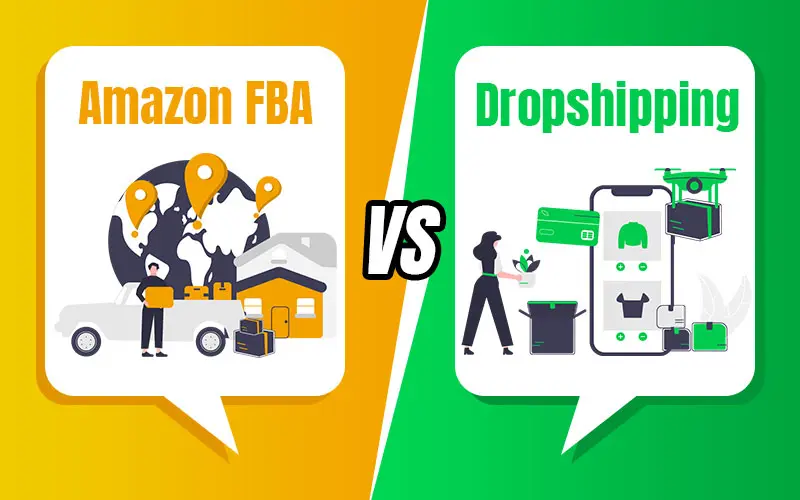
Dropshipping vs. Amazon FBA: Which One is Better?
When it comes to starting an e-commerce business, two popular fulfillment methods are Dropshipping and Amazon FBA (Fulfilled by Amazon). Both have their own set of advantages and challenges, and choosing between the two depends on your goals, budget, and business preferences. Let’s dive deeper into both methods to help you decide which one is better for your business.
1. What is Dropshipping?
Dropshipping is a retail fulfillment method where you don’t need to keep products in stock. Instead, when a customer makes a purchase, you buy the product from a third-party supplier (usually a wholesaler or manufacturer) who ships it directly to the customer. This means you don’t need to invest in inventory upfront or worry about managing a warehouse.
Pros of Dropshipping:
- Low Startup Costs: You don’t have to invest in products or inventory upfront.
- No Inventory Management: No need to handle, store, or ship products yourself.
- Wide Product Selection: You can sell a wide variety of products without holding stock.
- Flexibility and Scalability: You can scale quickly as you don’t have to worry about stock levels.
Cons of Dropshipping:
- Low Profit Margins: Since you’re relying on third-party suppliers, the margins can be lower compared to bulk purchasing.
- Less Control Over Shipping: Shipping times can be inconsistent, and delivery issues are out of your control.
- Customer Service Challenges: Handling returns, exchanges, and customer inquiries can be more complex.
- High Competition: Since entry barriers are low, many entrepreneurs compete in the same product niches.
2. What is Amazon FBA?
Amazon FBA allows you to sell products through Amazon’s platform while Amazon handles inventory storage, packing, shipping, and customer service. You send your products to Amazon’s fulfillment centers, and when an order is placed, Amazon picks, packs, and ships it directly to the customer.
Pros of Amazon FBA:
- Prime Eligibility: Your products become eligible for Amazon Prime, leading to increased visibility and sales.
- Amazon’s Customer Service: Amazon handles returns, refunds, and customer support, which reduces your workload.
- Scalability: Amazon’s vast infrastructure allows you to scale your business more easily.
- Brand Trust and Traffic: Being on Amazon allows you to leverage the trust and large customer base of the platform.
Cons of Amazon FBA:
- Upfront Investment in Inventory: You must buy inventory upfront and send it to Amazon’s warehouses.
- FBA Fees: Amazon charges fees for storage, fulfillment, and other services, which can eat into your profits.
- Less Control Over Branding and Customer Relationship: You have limited control over how your brand is presented and how customer relationships are built.
- Competition: Amazon is highly competitive, and your product will be displayed alongside numerous competitors.
3. Comparison Between Dropshipping and Amazon FBA
| Aspect | Dropshipping | Amazon FBA |
|---|---|---|
| Startup Costs | Low: You don’t need to buy inventory upfront. | High: You need to purchase inventory and send it to Amazon. |
| Inventory Management | No inventory management needed. | Amazon handles inventory storage and management. |
| Profit Margins | Low, due to supplier and shipping fees. | Higher, but FBA fees can reduce margins. |
| Scalability | Easy to scale, but relies on suppliers. | Easier to scale, but requires investment in inventory. |
| Shipping Time | Can be slow, depending on the supplier. | Fast, especially with Amazon Prime. |
| Control Over Branding | Full control over branding and store design. | Limited control over branding and store design. |
| Customer Service | You manage customer service and returns. | Amazon handles customer service, returns, and refunds. |
| Platform | Operates on your own website or other platforms. | Operates solely on Amazon’s platform. |
| Market Reach | Depends on your marketing efforts. | Huge reach due to Amazon’s established customer base. |
4. Which One is Better for You?
Choose Dropshipping if:
- You have a low budget and want to start with minimal upfront investment.
- You want control over your website and branding.
- You’re comfortable managing customer service and handling returns.
- You prefer flexibility in choosing what products to sell without worrying about inventory.
Choose Amazon FBA if:
- You have the capital to purchase inventory upfront and send it to Amazon’s warehouses.
- You want to leverage Amazon’s platform and customer base.
- You want to scale quickly with Amazon handling fulfillment and customer service.
- You want access to Amazon Prime and faster delivery times to boost your sales.
Conclusion:
Both dropshipping and Amazon FBA have their strengths and weaknesses. If you’re looking for a low-cost, flexible approach and have the ability to manage customer service, dropshipping might be the right choice for you. However, if you have the capital to invest in inventory and prefer a more hands-off fulfillment process, Amazon FBA offers greater scalability and takes advantage of Amazon’s vast marketplace.
Ultimately, your choice should depend on your business goals, available capital, and how involved you want to be in the day-to-day operations. Both models can be profitable if executed well!